
By Hotkhana Media · 23 November 2026 · 5 min read
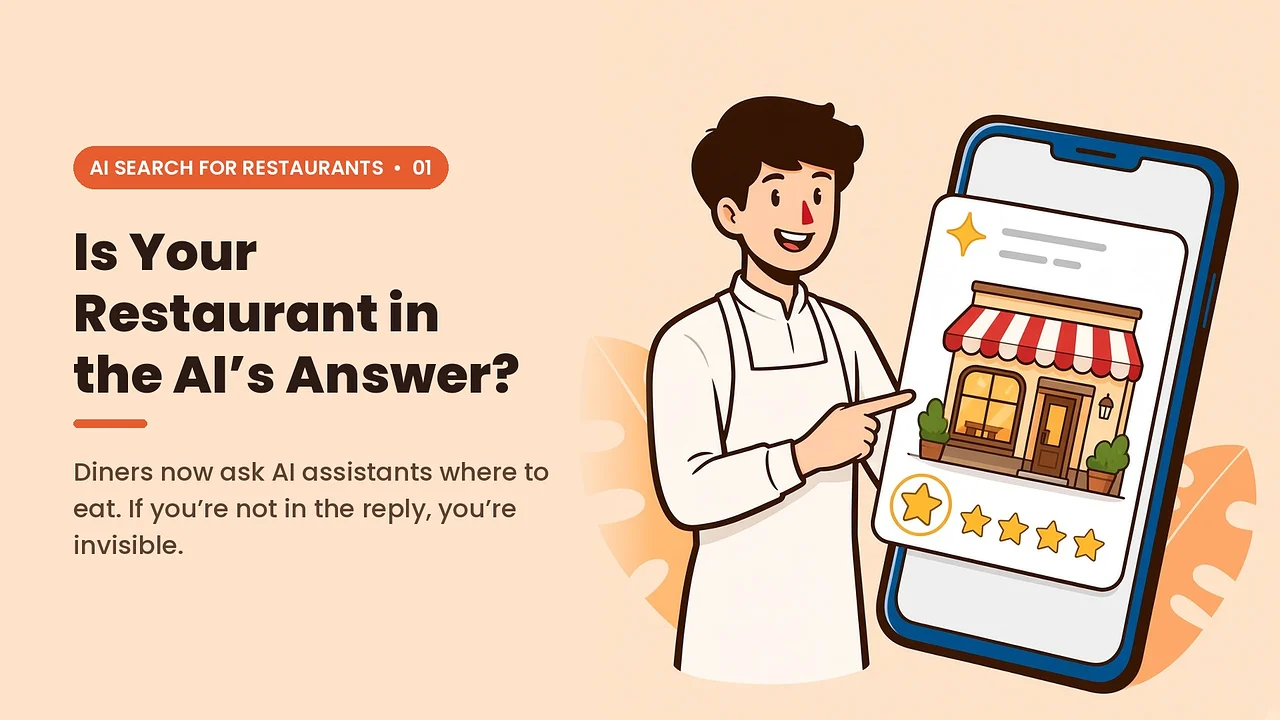
- AI assistants give diners a shortlist of two or three places, so being the top pick matters more than ranking on page one.
- Your website is the first place AI looks to understand who you are, what you serve and where you are.
- A menu published as real text, with dishes, prices and veg tags, is far easier for AI to use than a photo of a menu.
- Accurate hours, location, reviews and a clear story all help AI match you to the right diner.
- Restaurants that adapt early get the new word of mouth; those that wait quietly lose guests.
Think about how you chose your last restaurant on a trip. Chances are you did not scroll through ten links. More and more, people just ask ChatGPT, Gemini or another assistant, "Where should we eat tonight?" and go with what it says.
That is a big change for restaurant owners. The old game was to rank on a review site or on Google. The new game is to be named in the answer. Here is how we see it working, and what you can do about it.
Why does AI give a shortlist and not ten links?
Because the diner asked a question, not for a list. An assistant tries to answer it directly, so it suggests two or three places and moves on.
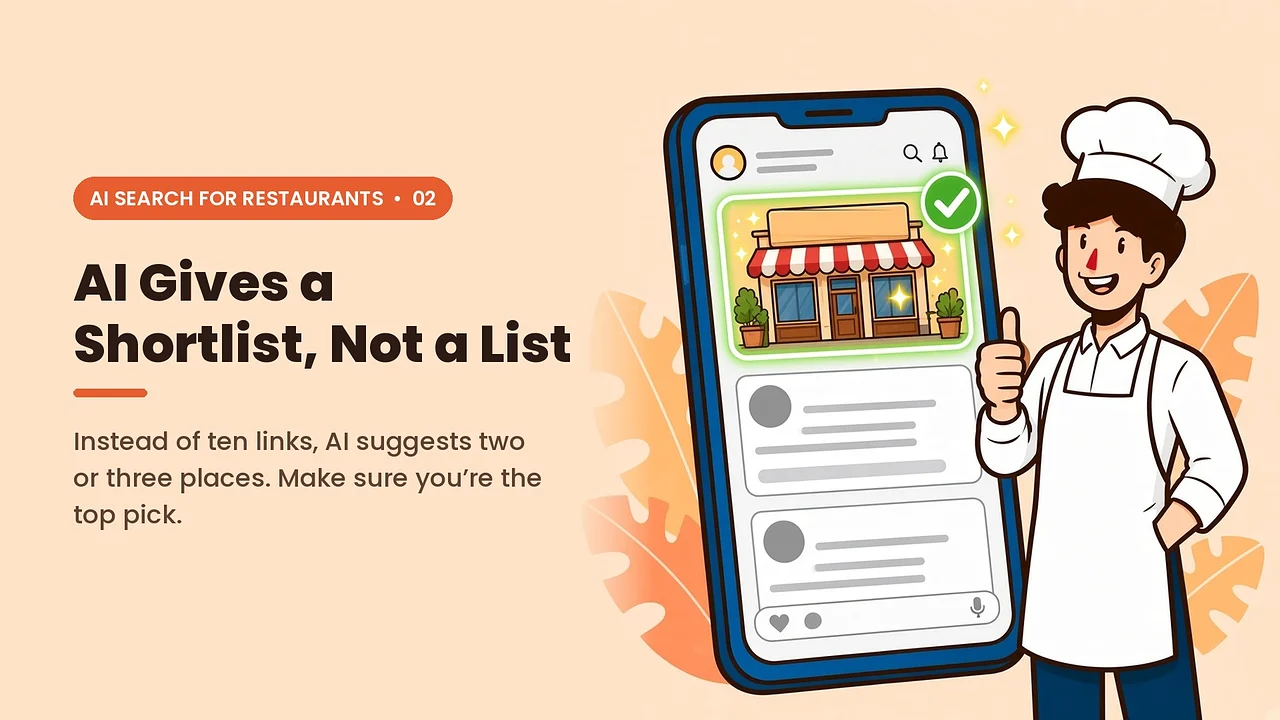
That means the top few spots carry all the weight. There is no page two to fall back on. Your aim is not to be somewhere in the results. Your aim is to be the pick the assistant feels sure about.
Why does your website matter so much?
An AI assistant has to learn about your restaurant from somewhere. Your own website is the one place where you control the facts: what you cook, who you cook for, where you are and when you are open.
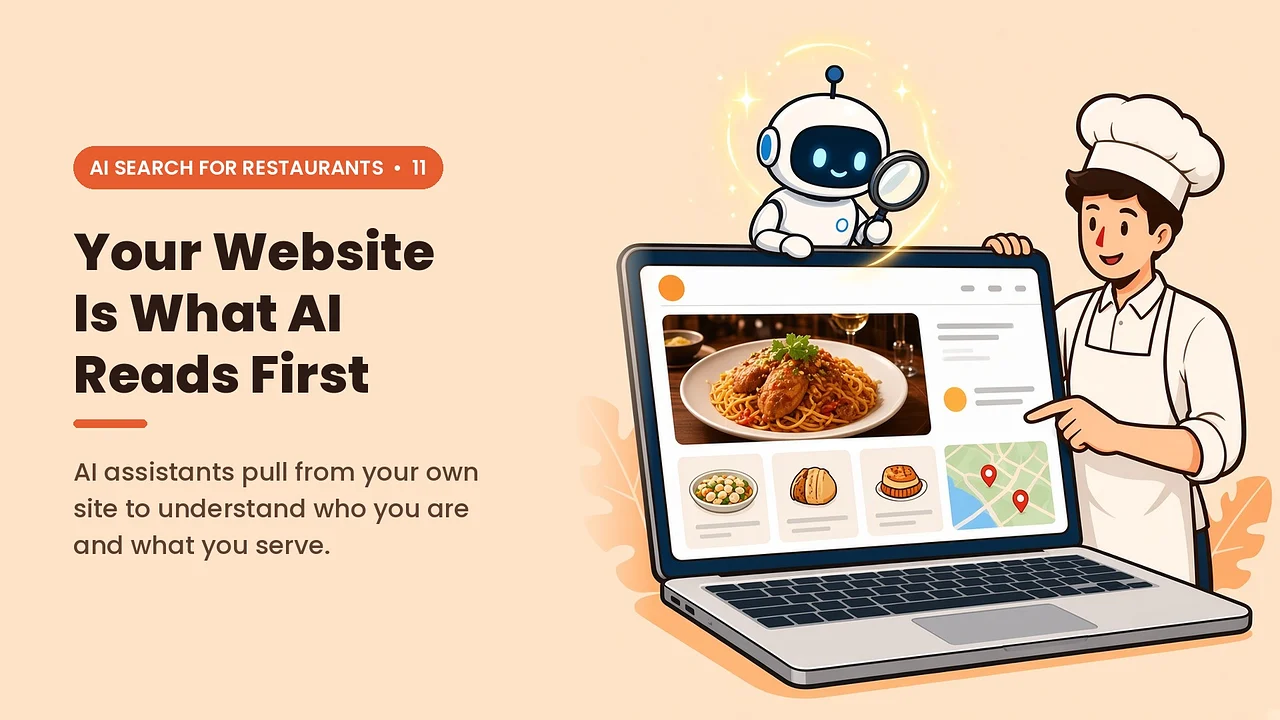
If the site is thin, outdated or just a few pretty photos, the assistant has little to work with. It will lean on whatever else it finds, and that may be old or wrong. A clear, well-built site gives it good material to quote. This is why we build restaurant websites that AI assistants can actually read and recommend.
Can AI read a menu that is only a photo?
Often, not well. A blurry picture of a menu card, or a PDF made from a scan, is hard for a machine to read. Dish names get missed. Prices get jumbled. Anything in a regional script or a fancy font can turn into nonsense.
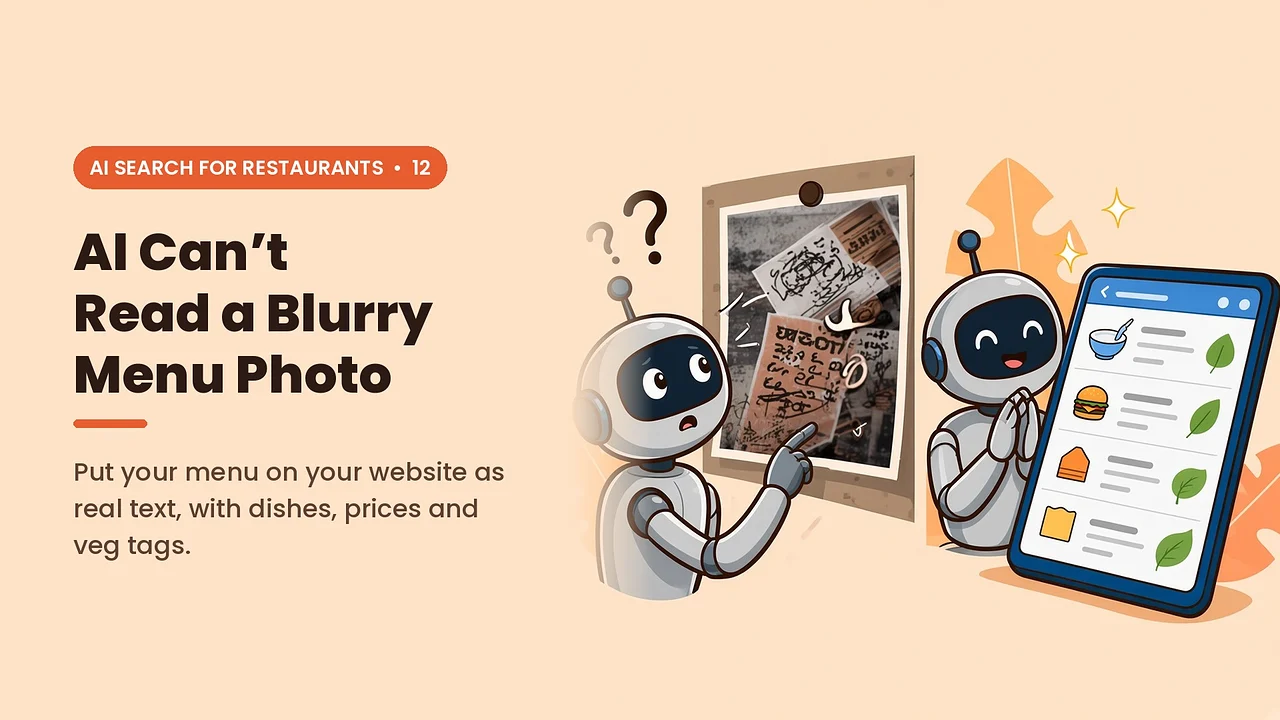
A human guest might squint and manage. An assistant will usually just skip it and recommend a place whose menu it can understand. Many Indian restaurants lose out here without ever knowing.
How do you make your menu AI-readable?
Put it on your website as plain text. List each dish by name, add a short line about what it is, and show the price. Mark what is veg, what is vegan, what is spicy, what is Jain-friendly if you offer it.
Keep it current. If prices change or a dish is dropped, update the page the same week. Photos are lovely and you should still use them, but treat them as a bonus on top of the text, never a replacement. If you need a menu that looks good and reads well, our menu design work covers both.
What should you tell AI about who you serve?
Be specific. The more clearly you say who you are for, the better the match when a diner asks something like "a good veg place for a family dinner under a certain budget".
Spell these out on your site:
- Your cuisine and signature dishes
- Veg and non-veg options
- Price range
- Opening hours and days
- Whether you take reservations, do delivery or have parking
- Good photos of the food and the space
Each detail is one more reason for the assistant to choose you for the right guest.
Do location, hours and contact details still matter?
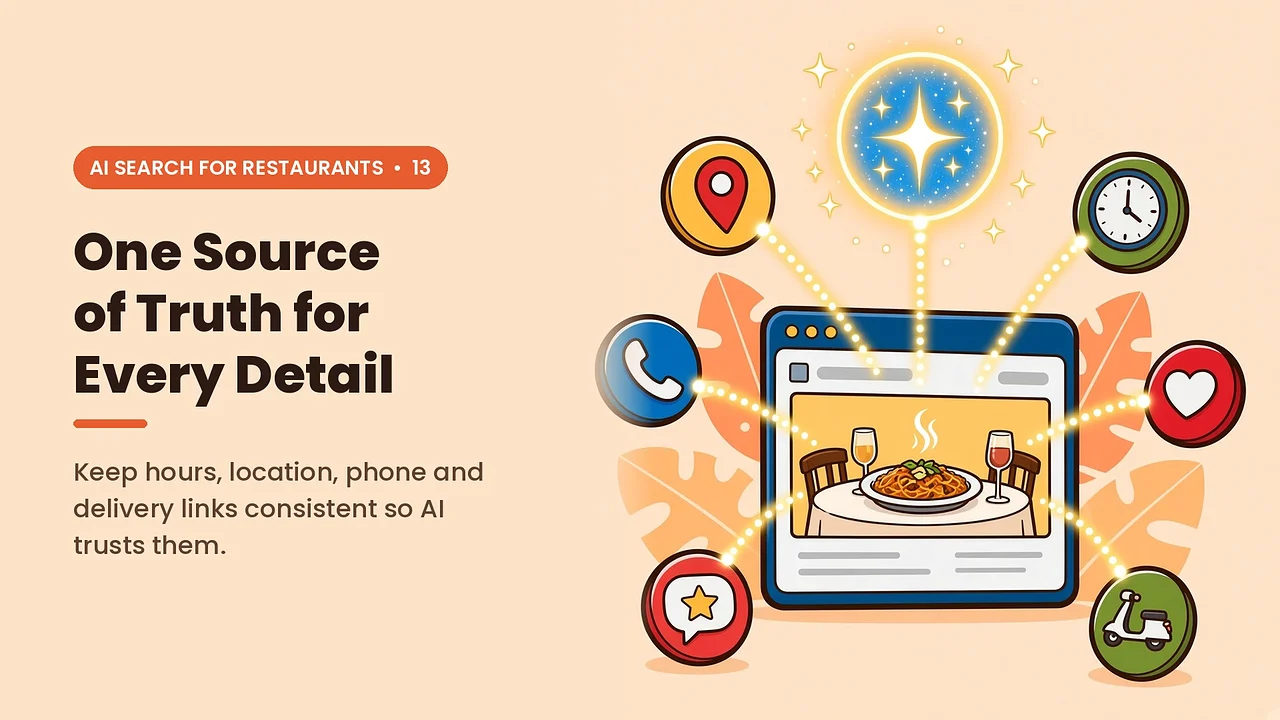
A lot. Many questions put to AI are local: "near me", "in Indiranagar", "open late". If your address, timings or phone number differ between your website, Google Maps and social pages, the assistant may not trust any of them.
Pick one correct version and use it everywhere. Check it again after festivals and holidays, when hours often change. Our local SEO and Google Maps work starts with exactly this clean-up.
Do reviews still shape what AI recommends?
Yes. Reviews tell an assistant that real people eat at your place and enjoy it. Recent reviews help more than a pile of old ones, and thoughtful replies from you show that someone is paying attention.
You do not need to chase five stars from everyone. Just make it easy for happy guests to leave a few words, and reply to each review, good or bad, in a polite, human way.
How do tourists find local restaurants through AI?
Visitors do not know your lane or your reputation. So they ask an assistant, "What do locals love here?" and trust the reply.
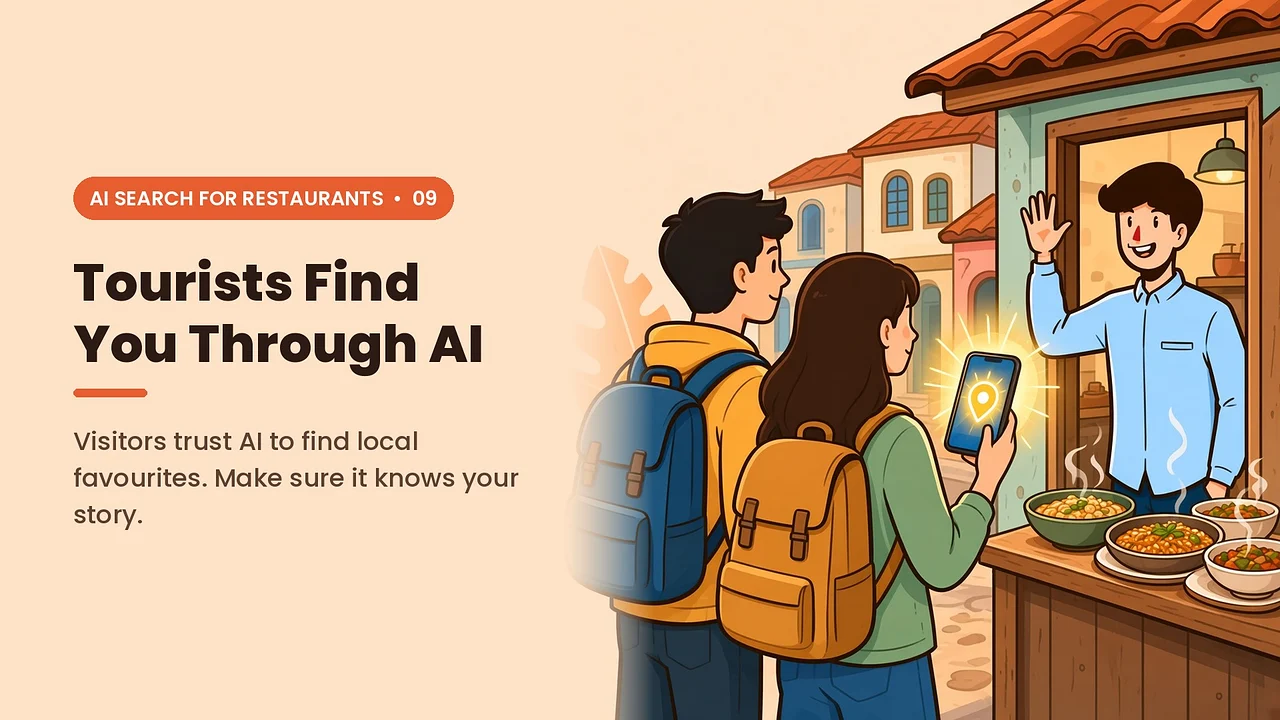
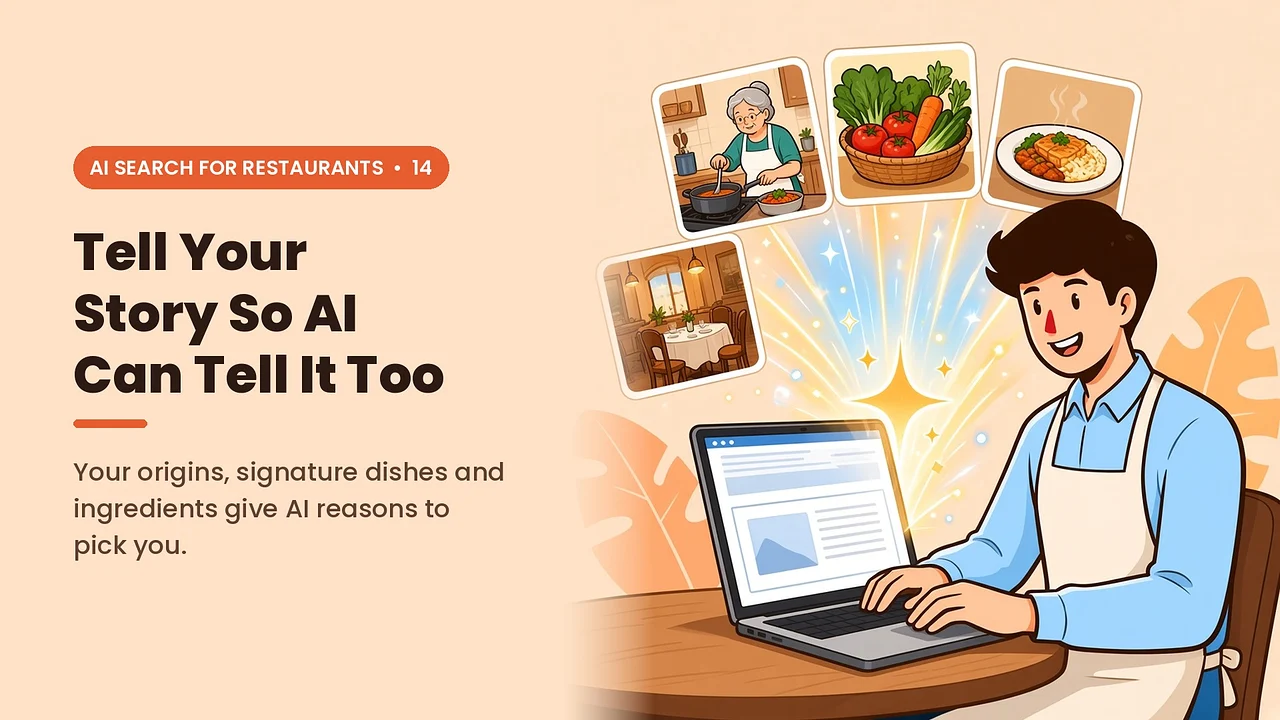
If you run a family kitchen that has served the same dish for thirty years, say so on your website. The assistant cannot repeat a story it has never read. Tell it what makes you local, and tourists will arrive already curious.
What does one AI recommendation mean for your tables?
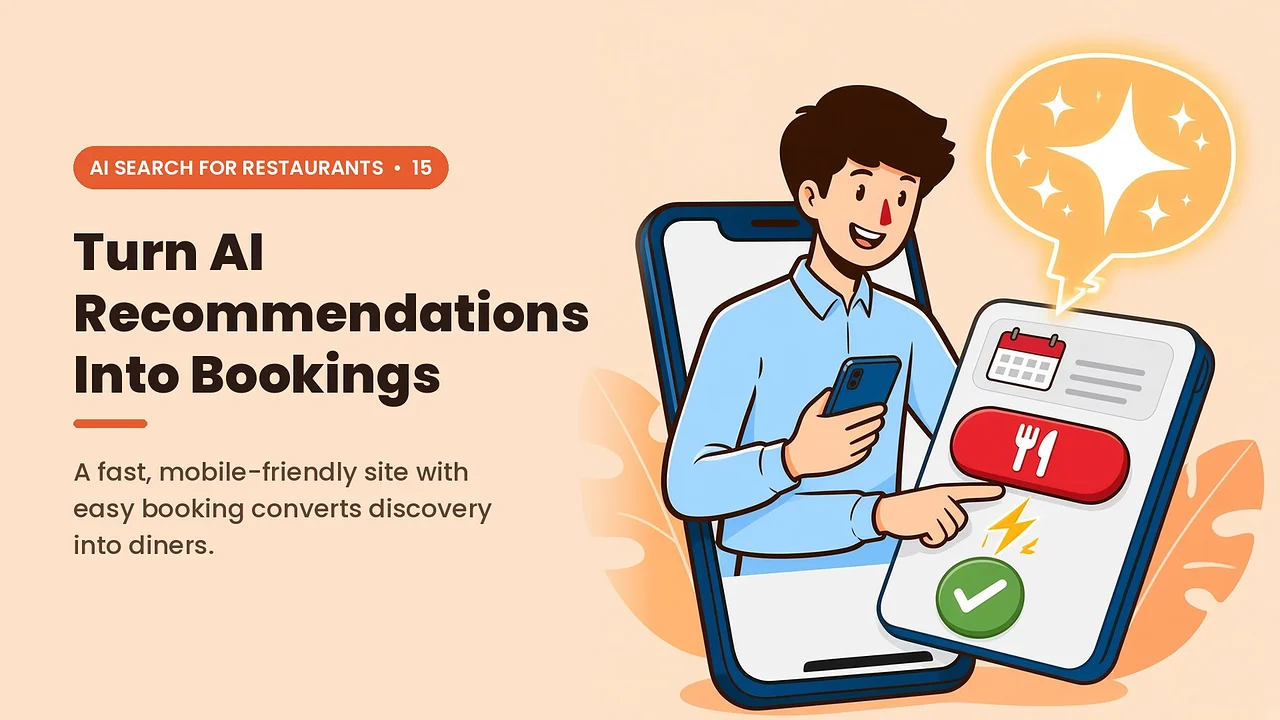
A recommendation rarely brings one guest. A diner asks on behalf of a family, a group of friends or a birthday party. One good answer can fill a whole table.
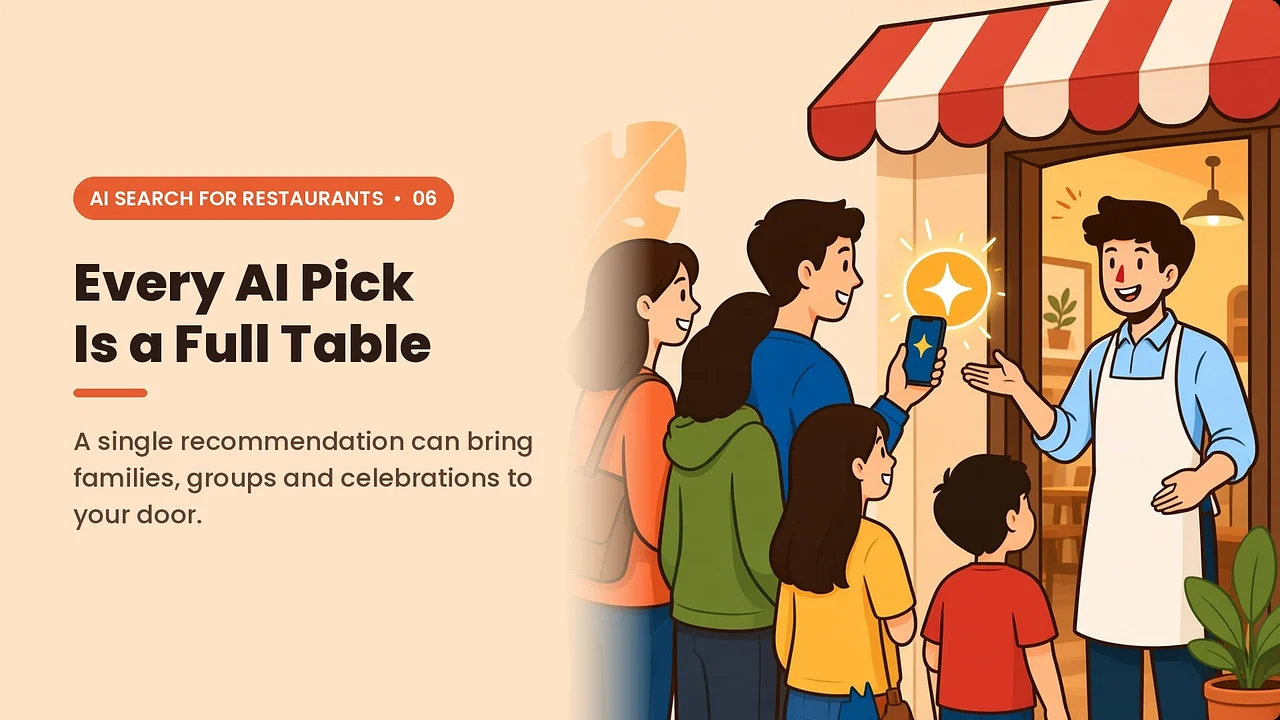
That is why a small improvement in how you appear can matter more than it looks. You are not winning a click. You are winning a booking for six.
Is AI visibility the new word of mouth?
We think so. Word of mouth used to be a friend saying, "Try this place." Now the assistant plays that friend for thousands of people at once, and it builds its opinion from what your website, reviews and listings say about you.
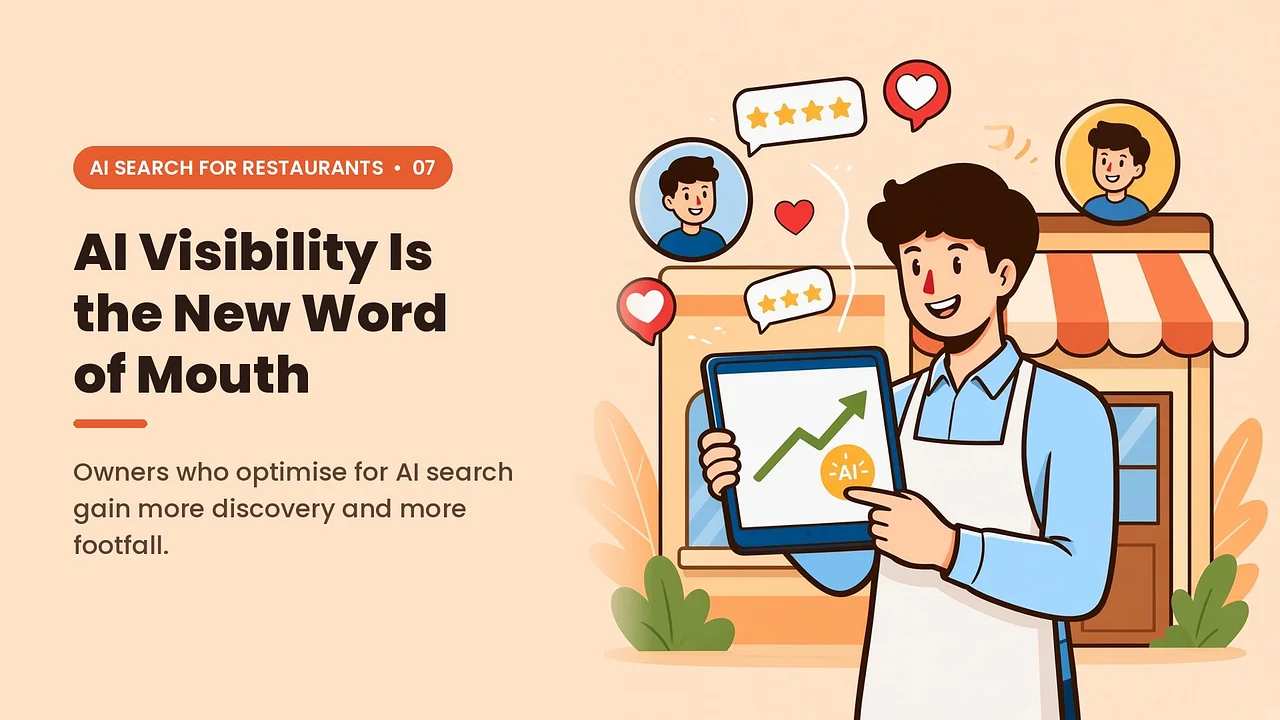
Owners who look after those things get discovered more and see more footfall. It is not magic. It is the same old rule, serve well and be easy to find, applied to a new kind of search.
What happens if you wait?
Discovery has moved from review sites towards AI. Restaurants that adapt early will be in the answers, and those that do not will slowly go quiet, even with good food. Nobody notices a place that is never mentioned.
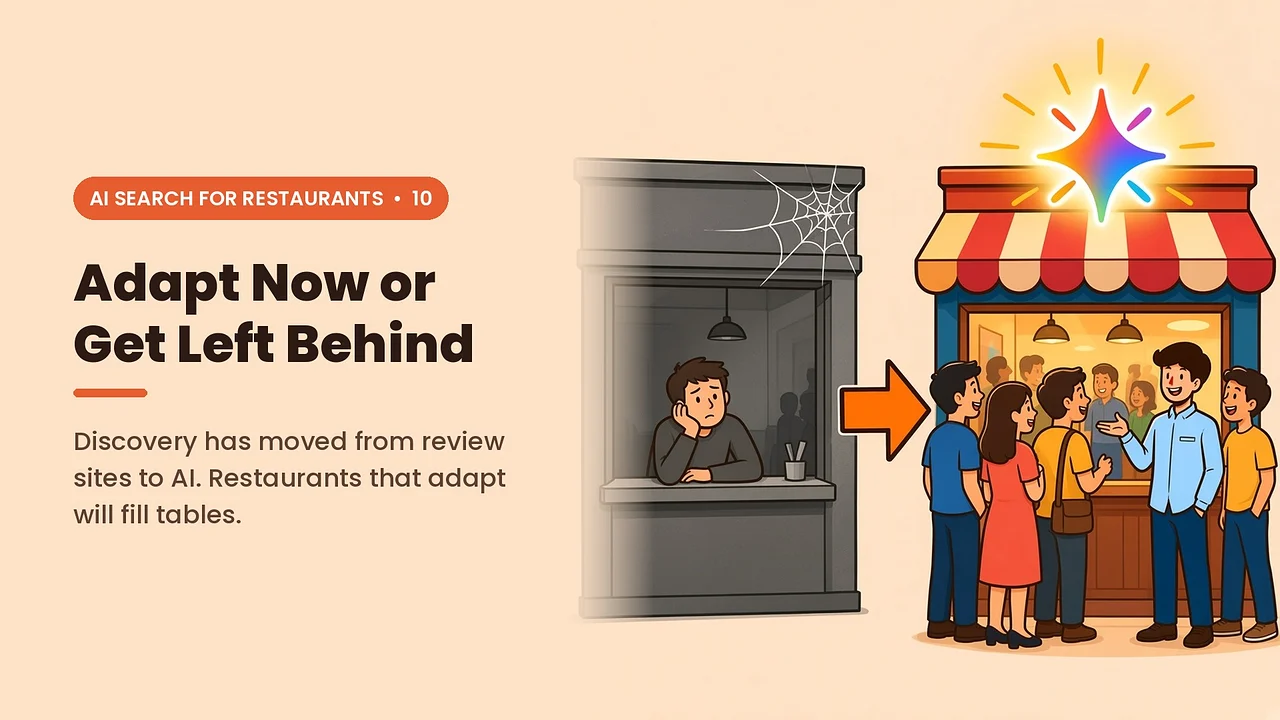
The good news is that the first steps are simple: a proper website, a text menu, correct details, fresh reviews and your story in your own words. If you would like help, talk to Hotkhana. We are a Bengaluru agency that works only with restaurants, bars, cafés and cloud kitchens, and we can look at how you show up in AI answers today.
Frequently asked questions
How do AI assistants decide which restaurants to recommend?
They pull from what they can find about a restaurant, mainly its website, listings and reviews. Clear information on cuisine, menu, price, location and hours helps an assistant match you to the right diner.
Why is my restaurant website important for AI search?
Your website is the one source you fully control, so it gives AI assistants accurate facts about your food, location and story. A thin or outdated site leaves the assistant guessing or relying on old information elsewhere.
Should I put my menu on my website as text or as a photo?
Use text. AI assistants struggle to read blurry photos and scanned PDFs, but they can easily use dish names, prices and veg tags written as plain text. You can still add photos alongside.
Do Google reviews affect AI restaurant recommendations?
Yes, reviews signal that real guests like your place. Fresh reviews and polite, thoughtful replies from the owner help show that the restaurant is active and cared for.
What is the first step to get my restaurant recommended by AI?
Start by making sure your website clearly states your cuisine, menu, prices, hours and address, and that these match your Google Maps listing. Then add a text menu and your restaurant's story.
Want this for your restaurant?
Hotkhana Media builds AI-ready restaurant websites and runs AI-driven marketing from Bengaluru. Free audit, reply within the hour on WhatsApp.